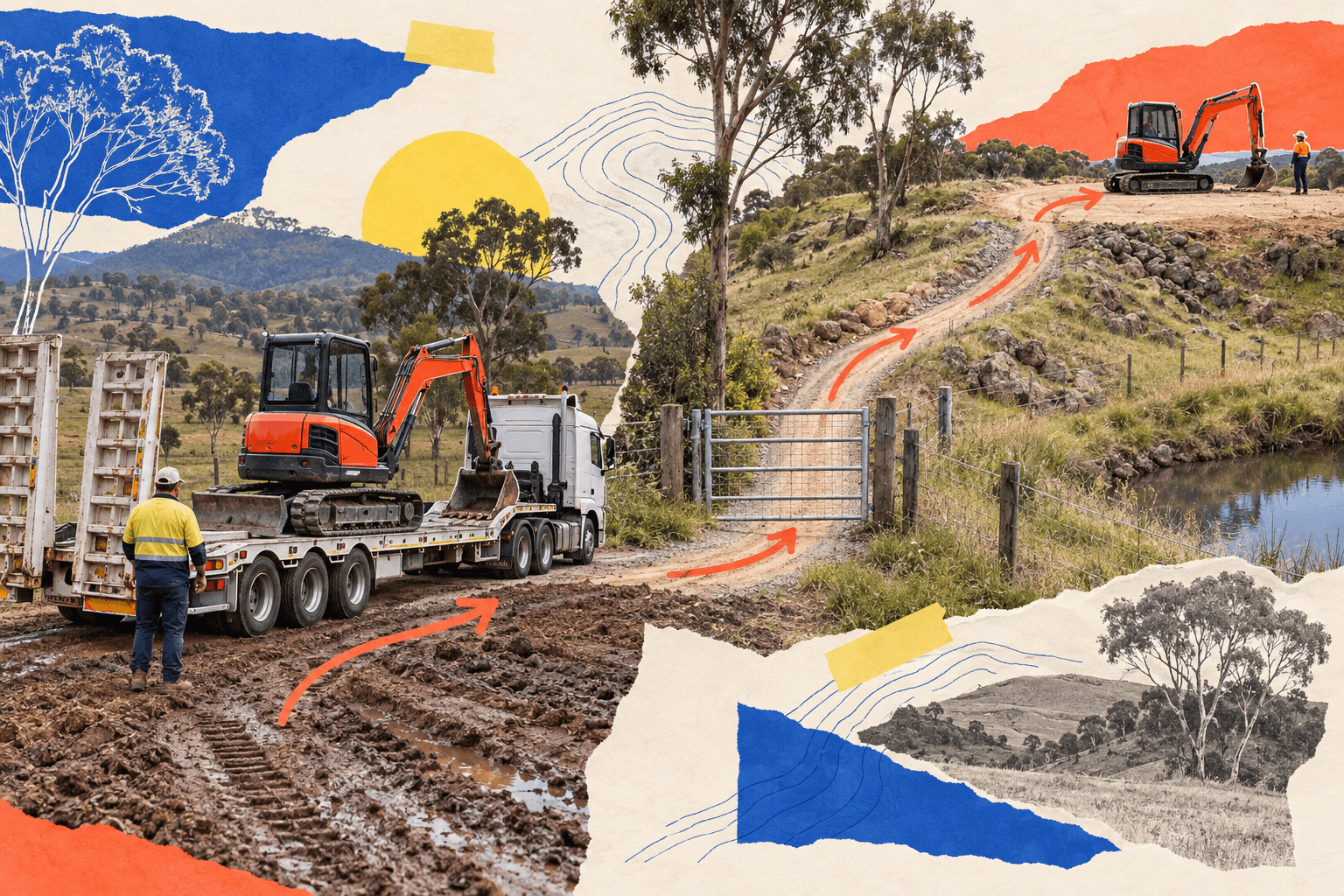
Site conditions decide the machine more often than the task does. Before you call a supplier, check the ground (soft, wet, rock or fill), the access (gate width, overhead lines, turning space), the slope, the climate on the day, traffic next to the work and the distance from the nearest depot—then describe each one in your hire brief.
Why site conditions change the hire
Two jobs with the same scope can need completely different plant. A 5 tonne excavator that suits a flat, dry block in Perth’s sand may bog on a wet clay site in western Sydney, and a boom lift that works on a car park slab may be the wrong tool on a sloping, soft verge. Suppliers can only recommend the right class, tracks, tyres and attachments if they know what the machine will stand on and travel over.
Conditions also change the cost. Poor ground adds matting, standby and recovery; tight access adds smaller, slower machines and extra trips; remote sites add transport, travel time and field-service risk. Building those into the quote up front is cheaper than discovering them on day one.
Quick reference
| Condition | What changes | Ask the supplier |
|---|---|---|
| Soft or wet ground | Tracks over wheels, lighter machines, matting | Ground bearing pressure, track width, recovery plan |
| Tight access | Compact and zero-swing machines, more trips | Transport width, retractable tracks, delivery vehicle size |
| Steep or sloping site | Tracked machines, winching, benching | Rated gradient, stability limits, operator experience |
| Heat and dust | Water carts, air-conditioned cabs, shift timing | Dust controls, fuel and coolant checks, cab filtration |
| Live traffic | Traffic control, smaller footprint, night works | Traffic management plan, TCP, after-hours rates |
| Remote locations | Transport, spares and field service | Mobilisation cost, service response, backup machine |
Once you know the conditions, match them to the job in our project recipes or build a hire brief to send to suppliers.