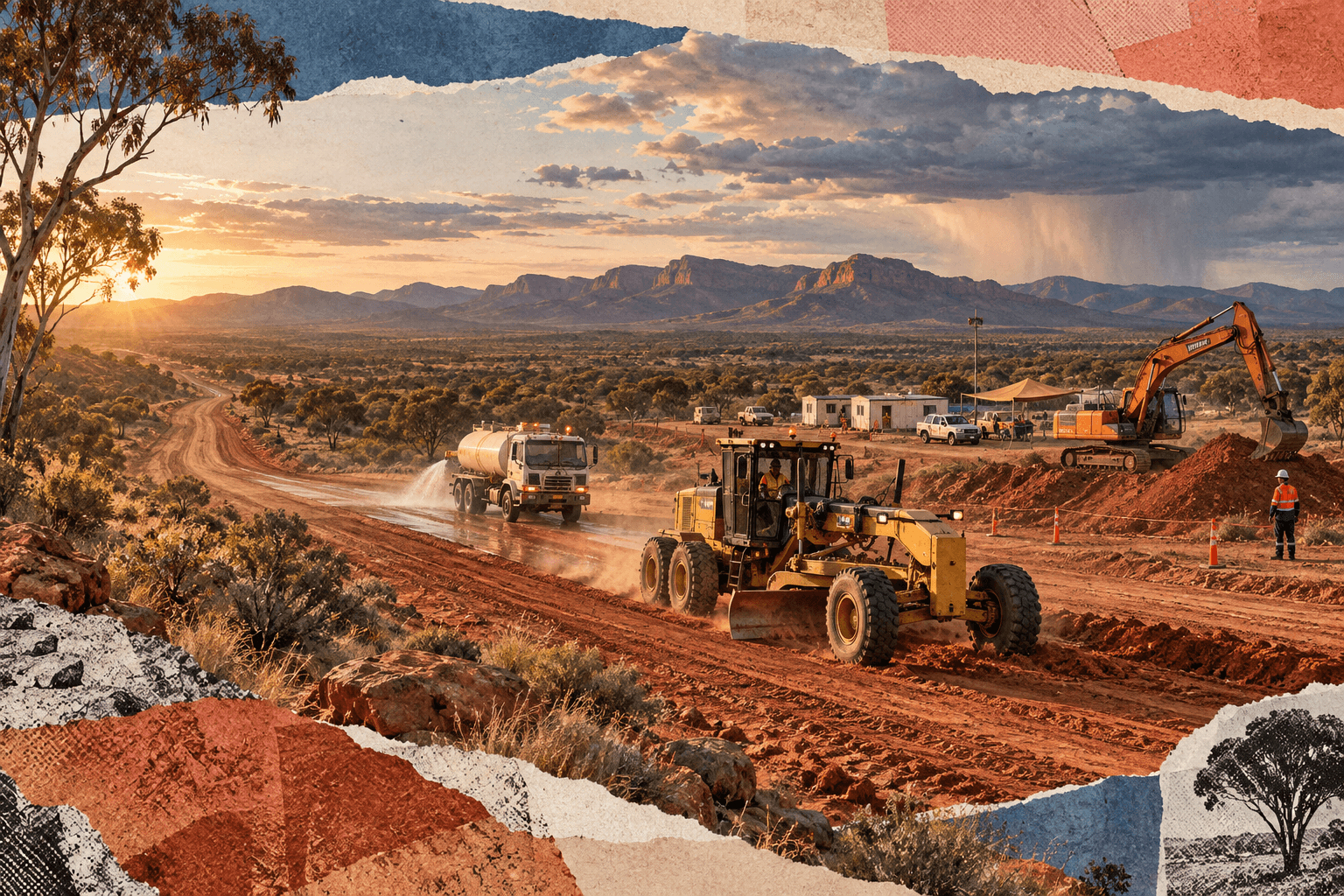
Darwin projects typically involve defence, port operations, oil and gas, civil construction. Cyclone readiness, heat, wet-season access and remote support should form part of the equipment plan. Confirm where each machine will travel from and what mobilisation costs apply before comparing rates.
What shapes plant hire in Darwin
Tropical coastline with laterite, mangrove margins and wet-season rainfall.
Defence, port and marine works, LNG support, residential and commercial construction.
Tropical in the Top End with a wet season from roughly November to April; arid in the Centre with extreme summer heat.
Cyclone readiness, heat, wet-season access and remote support should form part of the equipment plan.
Typical plant hire jobs in Darwin
- Defence facilities
- Port and marine works
- LNG support
- Residential and commercial construction
Darwin supports defence, ports, oil and gas, civil infrastructure, utilities, construction and wet-season response across the Top End.
Across Northern Territory more broadly: Laterite and gravels in the Top End become boggy in the wet; the Centre has sand, rock and calcrete. Many remote roads close or become restricted in the wet. Schedule mobilisation during the dry season where possible.
Suppliers servicing Darwin commonly also cover Palmerston, Howard Springs, Berrimah, Humpty Doo. If your site is on the edge of a supplier’s area, ask whether travel is charged as a fixed fee or per kilometre.
Checklist for a Darwin hire
- Access: gate, unloading point, turning, overhead services and route to the workface.
- Ground: surface, bearing capacity, gradient, recent rain and rock or groundwater.
- Movement: delivery window, traffic control, escorts and permits (The NT is not part of the national heavy vehicle scheme).
- People: inductions, White Cards, licences and site contact. WHS regulator: NT WorkSafe.